Dara Home Studio

Most Popular Tags: Action adventure blu-ray book childrens books christianity comedy drama dvd erotic romance erotica family fantasy fiction games gift idea health historical fiction historical romance history horror humor inspirational kids kindle kindle book kindle freebie music mystery paranormal paranormal romance photography playstation 3 science fiction self-help sex spirituality suspense video games wii women xbox 360 young adult...etc

MODULATIONS PART 4: TREMOLO, VIBRATO AND ROTARY / LESLIE! (with Free Vst Plugins Inside)


Hello and welcome to Today's article! 
This week we analyze an interesting branch of modulation effects, the one more tied to the "vintage" and psychedelic sound of sixties and seventies: Tremolo, Vibrato and Rotary Speaker.

Tremolo is an effect that simulates a rhythmic opening and closure of the guitar's volume control, it can be set to different timings and it must not be confused with the Tremolo Bridge.
A good example of tremolo can be heard at the beginnig of the Nancy Sinatra's song "Bang Bang".

Vibrato, instead, is an effect that rhythmically alters the pitch of a sound, through a frequency modulation. It is easily achieved with vocals (with the singer periodically contracting its diaphragm) and string instruments, making the string to vibrate with our fingers or the whole bridge to move via the Whammy Bar, but there are also many electronic devices that can produce a similar result, and their "warbling" sound often appeared on Surf Rock or Noise Rock records. A good example of this effect may be found at the beginning of the song "Machine Gun" by Jimi Hendrix.

Rotary - Leslie: this last variation is basically an actual speaker rotating inside a box (created by Donald Leslie, thus the name), and its speed can be controlled the musician. 
The result is a phenomenon called Doppler Effect: a frequency change of the perceived wave based on the varying of the position of it source. This device was particularly used with the Hammond Organ, a true protagonist of '60s and '70s music, that can be heard on many Deep Purple songs (for example in "Living Wreck"). 


These three effects, which are quite similar as a result, have two fundamental controls in common (although by downloading some of the free Vst listed below you'll notice that there are many more parameters available):

Speed (or Rate): controls the frequency of the variation, typically from a maximum (very fast) to a minimum, which may be as slow as one cycle taking several seconds.

Depth (or Intensity): controls the amplitude (in volume or in pitch) of the variation. The minimum depth is often zero (no effect on the sound at all), while the maximum depth does not normally cut the sound off completely at the cycle minimum, but may reduce it by as much as making it inaudible.


Today many DAWs already feature some basic Tremolo, Vibrato and Rotary Effect, but if you want to try something new and different here's a selection of the best freeware effects available:

Pan-Oh-Rama - Autopan, Tremolo and Filter

Bts TremoloDelay - An Interesting Tremolo and Delay simulator

Stomp King RoTube - Tube warmed Rotary / Leslie effect

MVibrato - Traditional Vibrato with adjustable shape

MTremolo - Easy and fully automatable Tremolo

NdcTrem+ - Tempo Sync-able Tremolo effect

Mr Donald - Midi Controlled Rotary / Leslie simulator

Real Rotor - Organ - focused Rotary / Leslie effect

Effectizer - an interesting Multi Effect plugin that features Tremolo too


Become fan of this blog on Facebook! Share it and contact us to collaborate!!

SINGLE COIL PICKUPS! PART 2/2 (a guide for dummies)


CLICK HERE FOR THE PART 1/2 OF THIS TUTORIAL!

According to the bridge of the particular guitar, strings may have a different distance between them, thus the pickups have to set the polepieces at a certain distance between them in order to intercept the vibration at best.
Here are the most common strings spacings: when choosing a pickup take notice of your guitar's bridge or you will degrade the overall sound of your guitar:


Guitar type                                                                             1st-to-6th string distance
                  
Standard spacing
(Vintage Gibson guitars)                                                                       48 mm
                                                                   
F-spacing
(Most Fender guitars, modern Gibson, Floyd Rose bridges)            51 mm
                                                                                                         
Very close to bridge, extra pickup                                                        52.3 mm
(Roland guitar synth hex pickups)

Fender Telecaster spacing                                                                     55 mm

Steinberger Spirit GT-Pro spacing                                                          60 mm
                                                                                                                                             

The three most famous types of Single Coil Pickups are: the Gibson P90, the Telecaster Single Coil and the Stratocaster Single Coil:

Gibson P90: the most famous Gibson single coil pickup, born in the '50s, features a traditional "Soapbar" shape,  alnico bar magnets lying under the coil bobbin and two screws to adjust the distance from the strings (the closer the pickup is to the string, the more vibrations it will catch).
The result is a snappy sound typical of the single coil pickup, but with some hum problem, that over time led Gibson to focus its production mainly on Humbucker pickups.
Today, anyway, there are still many manufacturers that produces P90 pickups with hum cancelling technology, so that it's possible to achieve this typical sound without hum.

Telecaster single coils: The Fender Telecaster features two single coils: the neck one produces a mellower sound, while the bridge pickup produces an extremely twangy, sharp tone with exaggerated treble response, because the bridge pickup is mounted on a steel plate (commonly known as "Ashtray"), which gives the tone a particularly metallic character. These design elements allow musicians to emulate steel guitar sounds, making it particularly appropriate for country music, and, lately, alternative rock.

Stratocaster single coils: The Fender Stratocaster is a guitar in production by more than 50 years, and through its long life it featured any kind of pickup in the market, yet if we refer to the Stratocaster set, we think of three single coils with magnet poles of different heights to compensate the different outputs of the strings, and a 5 ways pickup selector.
The particularity of this selector is that it lets the player to choose one of the three pickups or a combination between two of them (but the output will be the one of the lowest output of the two pickups), and this helps achieving a very wide range of tones.
It's typical for a guitar player to switch often between pickups while playing, according to the tone needed, and this is typical when using Single Coil pickups, more than with Humbuckers.
The masters of the classic Stratocaster sound, among the thousands of guitar player that used these pickups, are Jimi Hendrix, Marc Knopfler, David Gilmour, The Edge and Eric Clapton.

Bass pickups are very similiar to the guitar ones and shares the same problems (in some case, such as the original Fender Musicmaster, there was no difference between the guitar and bass pickups. They were exactly the same part), and a characteristic of some model is to feature oversized polepieces, on both Single coils and Humbucker, such as in the Music Man basses.

CLICK HERE FOR THE PART 1/2 OF THIS TUTORIAL!

Become fan of this blog on Facebook! Share it and contact us to collaborate!!

SINGLE COIL PICKUPS! PART 1/2 (a guide for dummies)


Hello and welcome to this week's article! 
Today we're going to talk about guitar and bass single coil pickups!
Let's start off by saying what a pickup is: a pickup is a magnet (with a core of material such as Alnico or Ceramic), wrapped with a coil of thousands of turns of copper wire, that electromagnetically converts the vibration of the strings to an electric signal; this signal is fed to an amplifier and then sent to a speaker, which makes it audible.

The first pickups to be mounted on a guitar were created by George Beauchamp in the early '20s, and consisted of two large "U" shaped magnets and one coil, known as the "horseshoe pickup".
The pickup was mounted for some Rickenbacker lap steel guitar, these devices started to appear  on a regular guitar more than 10 years later.
The pickup (and therefore the concept of electric guitar) became popular around 1936, with a Jazz player called Charlie Christian, which featured a pickup on his hollow body guitar, a Gibson Es150, and his endorsement made this device finally famous.

The single coil Pickups were the first to be created, and consisted as we said in one coil for each pickup, that granted a certain output according to the power of the magnet and the amount of copper wrapped around it: the more the power, the more the input level from the guitar to the amplifier, therefore a fuller tone, richer, more suited for distortion.
The lesser the output, instead, the more the tone tends to be similiar to an acoustic guitar and acquires the vintage character typical of the '50s and '60s guitars.

A known issue of single coil pickups is Noise: for some reason this kind of pickup is prone to catch a hum known as "the 50/60hz hum", caused by magnetic disturbances, and this problem can become pretty annoying when turning up the amplifier gain, therefore through time many manufacturers started to research their own way to solve this problem, and the two most effective results has been the Humbucker (Click here for a dedicated article), and the active pickups (created by Emg), which can be both Humbucker or Single Coil and consists on a low output pickup passing through a battery powered internal preamp that raises the output level keeping it clean and crisp.
Other producers (such as Lace Sensor, Kinman and Fender itself with the Vintage Noiseless Pickup serie, produced around the year 2000) succeeded in creating Single Coil pickups that produced no hum, by using innovative materials and trying different winding techniques.

Hum problem is a minor problem for Bass, since this instrument is usually less distorted and less hi-frequencies oriented, yet for some music genre it's suggested anyway to use active pickups, since even bass can reach high levels of distortion.
Another interesting feature is the fact that the magnet polepieces can be set in the pickup following different criteria: one for each string as it happens most of the times, two for each string (as in the case of some Fender Precision and Jazz bass), or "lipstick" / "Rail" type, with a single pole taking the vibrations of all the strings, or just a group of them.

CLICK HERE FOR THE PART 2/2 OF THIS TUTORIAL!

Become fan of this blog on Facebook! Share it and contact us to collaborate!!

MODULATIONS PART 3: DELAY AND ECHO! (with Free Vst Plugins Inside)


Hello and welcome to This week's article!
Today we're going to talk about Delays and Echos! These effects are also called Time Based Effects, because they take the first sound and repeat it continuously at a certain rate, as if you were talking inside of a cave, with the reflections of your voice coming back to you on a delayed time, summing up one another.
Although the two terms are today exchangeable since they refer to the same thing, usually with "echo" we refer to the natural phenomenon, while the delay is the implementation of that in the audio effect; 
in common language many manufacturers calls "echo" a warmer, more vintage sound,  and "delay" a crispier, more digital sounding effect. 
Delay is an effect born in the '50s by recording a sound on a tape and playing it continuously to simulate an echo (the famous "Tape Echo"), but today it is a very common tool featured on pedalboards and racks of virtually any guitar player in the world; the two guitarists that probably own more of their trademark sound to this effect are Robert Fripp of King Crimson and The Edge, from U2 (which is famous for his riffs that are often exclusively based of the layers of delay).
Delay is the basic modulation effect, from which descends almost all of the other modulations: Chorus, Flanger and Reverb are consequences of applying particular settings to a delay, but there is also another use of a extreme settings applied to this effect: the looper.
A looper is a delay which records long phrases of an instrument, up to several seconds (e.g. a guitar riff) and set them in loop, so that for example a guitar player can play a solo above that base.

The most common and specific uses for a delay are the Doubling Echo, the Ping-Pong delay and the Slapback Echo.

Doubling Echo: Is used to create a sound that feels like the original instrument has been doubled by a second one, and to do this the delay time must be very short: 10 to 50 milliseconds. 

Slapback Echo: instead is a longer delay effect (75 to 250 milliseconds), and was often used in the '50s records to underline the main vocals, and later in the '80s it's been used on synths and percussions too, to produce creative rhythmic textures.   
Today Delay is often syncronized to the metronome of our Daw, to ensure that its repetitions are perfectly in sync with the song, but if we want to make the repetitions to cut through without being overshadowed by the other rhythmic elements of the mix it's suggestable to use the same metronome but with different beats, for example triplets, or a 5/4 rhythm; the delay will still be "on the click", but the repetitions will be noticed more.

Ping-Pong Delay: a particular type of stereo delay that "bounces" the repetitions (sometimes called "Taps") from left to right, sometimes it has been used by Jimi Hendrix and Brian May from Queen, among the others. 

Here are the most common controls found on Delays and Echos:

Length (time) - The delay of the repetition in ms (thousandths of a second)

Length (musical) - The length of the repetition in beats (e.g. 1/8 note)

Feedback - How much of the delay output is fed back into the input of the effect.

Wet/Dry (sometimes these two controls are fused on a single control called "Mix")
Wet - The amount of processed signal in the output.
Dry - The amount of unprocessed signal in the output.

Lowpass filter - A filter, which filters out from the repetitions the frequencies ABOVE this value.

Hipass filter - A filter, which filters out the frequencies BELOW this value.


Today most DAWs already feature some basic Delay and Echo Effect, but if you want to try something new and different here's a selection of the best freeware Delay and Echo Vst:

Readelay, a one of the most used free delays around, very versatile and professional

Variety of Sound Nasty Dla II, an excellent Chorus and Tape Echo device

Valhalla Freq Echo a creative and easy to use delay

WatCat a very interesting replica of the vintage hardware "Custom Copicat" device

Tal Dub a vintage style delay effect

TapeDelay a very simple tape delay effect

WHAT IS A SCALLOPED NECK (a guide for dummies)


Hello and welcome to this week's article! Today we're going to talk about scalloped fretboard!
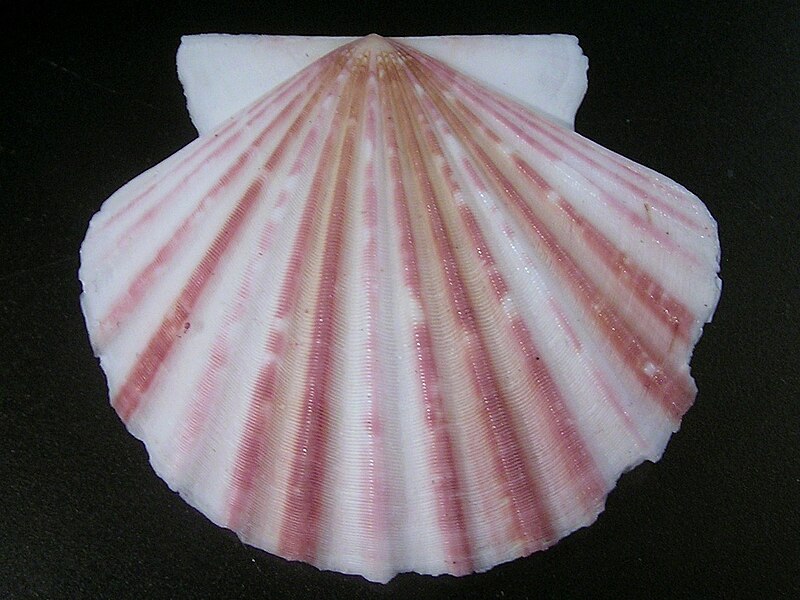
What is a scalloped fretboard? It's a guitar fretboard where the wood is filed down between the frets, making it look like the shell of a scallop:


Why would someone do this to his guitar?
To "increase the height" of the frets, thus avoiding the player to reach for the fretboard while playing, basically making the player just to push his fingers on the string without touching the wood: if the guitarist would try to touch the scooped out fretboard, he would obtain a bent note, due to the increased distance.
This technique was featured sometimes on a medieval instrument, the lute, and it was introduced on the electric guitar by Deep Purple's guitartist Ritchie Blackmore, being a medieval music lover himself.

Playing a scalloped neck can be hard at first, especially for those players who likes pushing with their fingers until they are firmly planted on the fingerboard, but on the other hand it will enhance the clarity and articulation of each note, and that is the reason why many shredders prefer to use it: because it shows even more the effort they put into creating and perfecting their technique. 
A scalloped fingerboard also helps the player to learn how to play better by forcing him to push more lightly on the strings (to avoid unwanted bendings), and makes some technique as tapping, pull off and bending a little easier.

There are different types of scalloped fretboard: the Yngwie Malmsteen signature Stratocaster has the whole fingerboard scalloped, while the Ritchie Blackmore model starts flat and becomes increasingly scooped towards the higher frets.
There are also many guitars (manufactured by Esp, Ibanez and many more) that features a flat fingerboard that becomes scalloped only in the last highest frets.
If you don't want to dig the fingerboard of your guitar but want to try the "scalloped feeling", you can also just mount higher frets, such as the Dunlop 6000, which can get you very close to the same result.  

To choose wheter this kind of guitar neck suits your playing or not it's up to you, in the meanwhile never stop experimenting!

The staff of Guitar Nerding Blog wish all of you a Merry Christmas!

Become fan of this blog on Facebook! Share it and contact us to collaborate!!

MODULATIONS PART 2: PHASER AND FLANGER! (with Free Vst Plugins Inside)


Hello and welcome to This week's article!
This time we continue our research for modulation effects focusing on Phaser and Flangers.
The sonic result of these two effects is pretty much similiar, but the phaser is softer, smoother and less extreme, while the flanger is more "Jet-Like".

The Phaser is the first of the two effects to be invented (around the '60), and consists into splitting the signal in 2 identical ones, and into applying to one of them a filter that alters its phase. By summing the two signals; the obtained effect it's a rhythmic phase cancellation that variates according to the settings, thus creating the "oscillating" sound typical of phaser.
The Phaser, unlike the flanger, doesn't work by delaying the second signal and summing it to the first one, therefore the sound is less aggressive.
Additionally, the output can be fed back to the input for a more intense phase shifting, creating a resonant effect by emphasizing frequencies between the wave notches. 
This effect has been use extensively by many bands, especially the psychedelic rock bands of any time, but the most famous guitar player that has used it on its records is probably Jimi Hendrix.

The Flanger effect is produced by summing two identical signals together, with one signal delayed of a small and gradually changing period, up to some centisecond. This produces a phase cancelling effect that variates according to the variating lenght of the delayed signal, producing an effect called "Comb Filtering", named after the visual effect this process does to the waveform.
Variating the time causes the two tracks to sweep up and down the frequency spectrum, and the flanger is the effect dedicated to produce this result.
Part of the output signal is sometimes fed back to the input, producing a resonance (sometimes even inverting the phase of the fed back signal) which further enhances the intensity of the effect.
One of the most famous guitar players that has used this effect on many songs is Edward Van Halen.

Here are the most common controls found on Flangers and Phasers:

Depth: Sets the depth of the flanger and phaser effect, the width of the oscillation. Higher values equals to deeper oscillations.

Resonance: Sets the amount of resonance. Higher values equals to more effect. 

Rate: Sets the cycle speed of the effect: higher values means a faster effect cycle. 

Modulation Phase: With this control the effect can be oriented on the stereo field in different time rates between left and right, in order to give it more ambient. To use this effect live we need a stereophonic amplification.

Today most DAWs already feature some basic Flanger and Phaser Effect, but if you want to try something new and different here's a selection of the best freeware Phaser and Flanger Vst:

Wok Flanger - a stompbox style flanger

Kjaerhus Audio Classic Flanger - simple to use 

Kjaerhus Audio Classic Phaser - simple and essential. 

Smart Electronix SupaPhaser - less simple, but with more presets. 

Blue Cat Audio Blue Cat's Flanger - simple yet effective. 

Smart Electronix MdspFlanger a flanger synchronizable to the tempo with different waveforms

Smart Electronix Phase90, a clone of the Mxr Phase 80 guitar stompbox

EmptySquare NXTPhase, described as "a phaser with an attitude". 

Tal Phaser, a stereo Phaser Effect

THE ELECTRIC GUITAR BRIDGES: TREMOLO (PART 2/2)


CLICK HERE TO READ PART 1/2

On the first part of our article we focused our attention especially on Fender Tremolo Bridges, but also Gibson guitars featured a noticeable amount of technology through the years, starting from the Bigsby bridge, that we have already seen.

The first attempt of Gibson at producing a proprietary bridge resulted in the Gibson Vibrola, which basically was a Bigsby Clone, with all the mechanism set outside the guitar body, but through the first years of the '60s the company kept on developing the project, giving birth to the Gibson Vibrato
The Gibson Vibrato was mounted on some SG model (which at the time were still called Les Paul),   and consisted on a long tailpiece that ended at the bottom of the guitar, with a whammy bar mounted on its side; the excursion of the bar was very low and the unit didn't have much success, but it'considered a passage to the more famous Gibson Deluxe Vibrato, produced from 1963, which had more fortune.

The Gibson Deluxe Vibrato finished what the first Gibson Vibrato started: to create an efficient Tremolo Bridge alternative to the Fender standard. The Deluxe version was a shorter and more effective version of the first Gibson Vibrato, and was featured mainly on the semi-hollow models of the brand, while the Short Version (called Short Vibrola) was mainly featured on the solid body models. These bridges have been offered always as an optional on Gibson guitars, while on the Fender models, the two point Synchronized Tremolo became a standard, so now the classic Gibson guitars that features a non-fixed bridge are considered a valuable collector item.

While other brands tried to develop their own tremolo standard almost all of them failed to gain success, but between the end of the '70s and the beginning of the '80s a new kind of Tremolo Bridge gained worldwide exposition, becoming a new standard on most of the guitars played by the raising heavy metal bands of the time: the Floyd Rose.

The Floyd Rose tremolo system is an "extreme" version of the Fender Synchronized Tremolo, featuring an extended excursion that allows the player to perform dramatic pitch drops, generating effects such as the "dive bomb", while retaining the original tuning.
The "secret" lays on a locking plate on the head nut, tightened with a hex key to fix the strings at this point after tuning. This provides extra tuning stability, but as an unwanted side effect it also prevents further adjustment of the pitch using the machine heads.
To refine the tuning without unlocking the nut, the player can use the fine tuners provided as part of the bridge mechanism on all but the earliest units.
This unit has been brought to world success by bands as Iron Maiden and Van Halen, plus it's a standard used by numerous guitar heroes such as Steve Vai, and as today it's still featured on high end guitars of almost every manufacturer, with no modification from the original project.
Licensed Floyd Rose versions are available for lower price guitars, or some guitar manufacturer produced its own Floyd Rose "proprietary clone", such as the Ibanez Edge or the Steinberger TransTrem

CLICK HERE TO READ PART 1/2

Become fan of this blog on Facebook! Share it and contact us to collaborate!!

One Big Gadget

image

CellPhones & Accessories

A premium Android-powered smartphone, the Samsung Epic 4G Touch for Sprint may be designed to supply the best multilayered entertainment experience thanks to the superior speed and display innovation. Powered by one in the fastest processors on the market–the new 1.2 GHz dual-core Samsung Exynos, the Epic 4G Touch runs on Sprint’s ultra-fast 4G network..

image

Cameras & Photo

Die kompakte, leichte, 18 Megapixel starke EOS 600D ist eine digitale Spiegelreflexkamera mit dreh- und schwenkbarem Monitor für aufregende, interessante und kreative Aufnahmen auf unglaublich leichte Art, eine ideale Wahl für ambitionierte Hobbyfotografen, die Wert auf Bildqualität und Komfort legen. Sie bietet praktisch alles, was man für gelungene Fotos und HD-Movies braucht..

Find the best Gadget

Find the best latest tech product at One Big Gadget.

Cell phones, desktops, digital cameras, laptops, mp3 players, tv, ipod, e-book readers, camcorders, printers, software, games, car tech, speakers, remote controls, blu-ray, office gadgets, gps, watches, toys, portable devices, kindle fire...etc

Featured Section

image 3

BlackBerry PlayBook Tablet

Freu dich auf das erste professionelle Tablet der Welt. Das BlackBerry® PlayBook™ bietet dir ein Tablet-Erlebnis ohne Kompromisse. Multitasking, megaschnell, Flash-fähig und extrem handlich. Dein BlackBerry® Smartphone kannst du über BlackBerry® Bridge™ bequem mit dem Tablet verbinden und über den hochauflösenden Bildschirm kannst du sicher auf E-Mail, BBM™, Kalender, Adressbuch und weitere Funktionen zugreifen. Entscheide dich für das Tablet, das alles kann – und noch mehr...